Joint and several liability - Who is at fault for a multi vehicle accident?
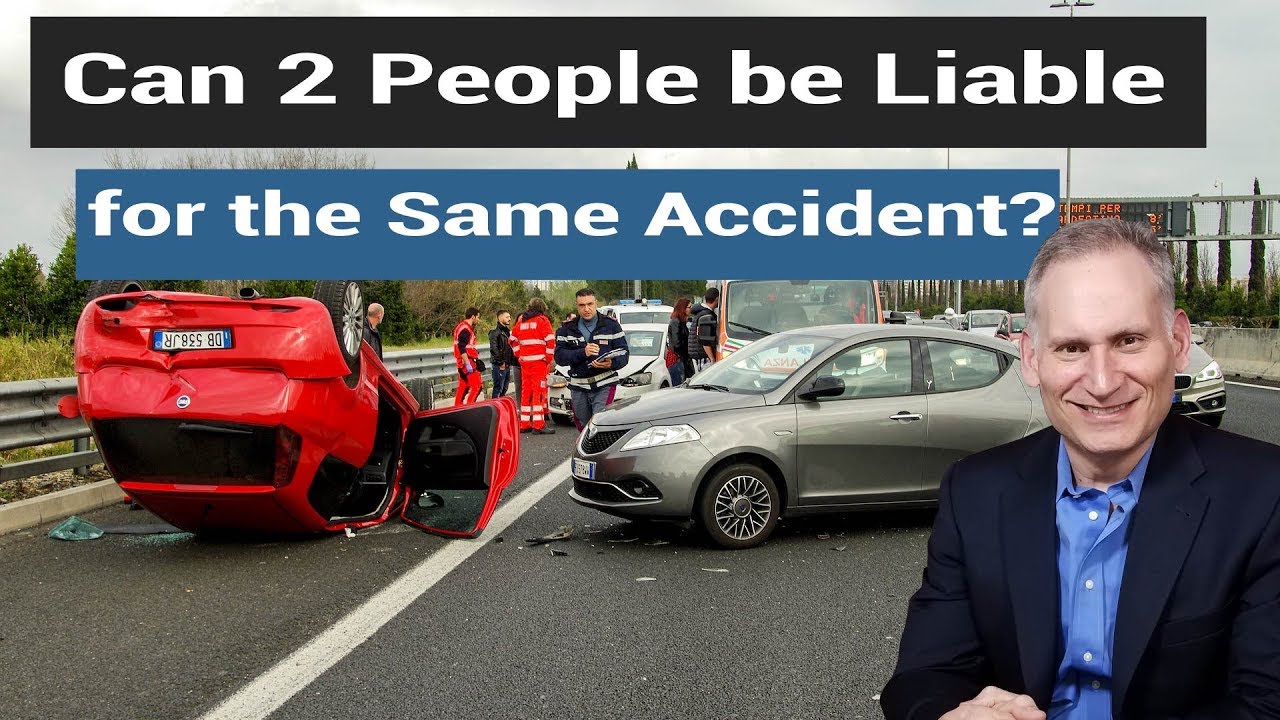
Hello and welcome to the LawFull channel. My name is Barry Zlotowicz and I am a Chicago personal injury lawyer. Were you in involved in a multi-vehicle accident and wondered who is at fault? This falls under the legal concept of joint and several liability. And it is extremely important to determine who is liable for your personal injury damages.
Many times, accidents are caused by more than one person. It would seem obvious then that if 2 people caused your accident, that you could recover against both parties for your injuries.
And the quick answer is yes, you can recover against more than one party for your damages. This falls under the legal concept of Joint and Several Liability.
But that raises the question of how much can you get from each party and how do you allocate or apportion fault between the defendants? Because that’s going to be a big factor in how much you can recover.
Why? Because one defendant might have a large insurance policy or a large number of assets while the other party has little or no insurance or assets.
That’s where joint and several liability comes into play.
Joint liability means that both parties are jointly liable for your damages – If the defendants are “jointly liable”, then each defendant could be liable to pay up to and including, ALL OF YOUR DAMAGES. This might be necessary if for example, the other defendant was uninsured or otherwise unable to pay
Why would one defendant be held responsible for ALL the damages? It is a matter of public policy. If someone is the victim of an auto accident that they did not cause, it is fairer to hold the defendants responsible for all the damages, than it is to put the burden on the victim.
Several liability refers to the individual responsibility of each party - If the parties are “severally liable”, that means that they are only responsible for their fair share of the damages
Joint and Several Liability is treated differently in each state so it’s really important to look at your state’s law regarding this issue.
Check out this website to find the law in your state: http://bit.ly/2F8aXsx
Some states follow a theory of “pure” joint and several liability. In this case, each defendant is 100% responsible for your damages regardless how much at fault for the accident they were.
So, for example, you get in an accident caused by 2 vehicles, A & B. Vehicle A is found to be 40% at fault for the accident. Doesn’t matter, you can go after vehicle A for 100% of your damages. Only a few states follow “pure” joint and several liability – check out the notes below to find out which ones
The second type is what is called “Modified” joint and several liability. This is followed by the majority of states and as a Chicago personal injury lawyer, this is the law that we follow here in Illinois.
In modified states, you can only go after a defendant for the whole recovery if a defendant is above a certain percentage at fault. So, for example, in Illinois, if a defendant is more than twenty-five percent responsible for an accident, then he/she is responsible for up to 100 percent of the victim’s damages If the defendant is less than 25% liable, then the defendant is liable for 100% of economic damages like medical bills and lost wages, but only responsible for his or her fair share of the plaintiff’s pain and suffering.
Finally, there’s also “pure several liability” which means that each defendant is only responsible for his or her actual percentage of fault. So a defendant who is 35 percent at fault for the accident only pays 35% of the damages, period.
By the way, after the plaintiff recovers against one of the defendants, the defendant will then go after the other defendant for reimbursement, or what’s called “contribution”, for the money paid to the plaintiff.
Now watch the video for more information on joint and several liability and if you have any questions or comments, put them in the show notes below or contact me at info@legalvlogger.com
lawjointseveral